














Incident in the Straits of Hormuz Reflects Iranian Nervousness
The United Kingdom Maritime Trade Operations (UKMTO) in Dubai has advised that an unidentified ship was hailed on VHF by numerous small armed vessels early on February 3 and was requested to stop. The master of the ship ignored the request and proceeded on his course.
The incident appears to have occurred when the ship was just inside Omani waters on the southern side of the internationally-recognized Traffic Separation Scheme, off the northern tip of the Musandam peninsula.
Ships approaching the Straits of Hormuz are normally hailed separately and successively by the Iranian Navy (Nedaja), the IRGC Navy, and the Iranian Coastguard. When vessels are in Iranian waters, it is maritime custom and practice for vessels to reply, although this protocol is not observed by US Navy vessels transiting the Straits. When such Iranian calls are made when vessels are in Omani waters, vessels are not obliged to respond, and the Omani authorities will normally jam such calls when their radar systems indicate that the vessel being hailed is in Omani waters.
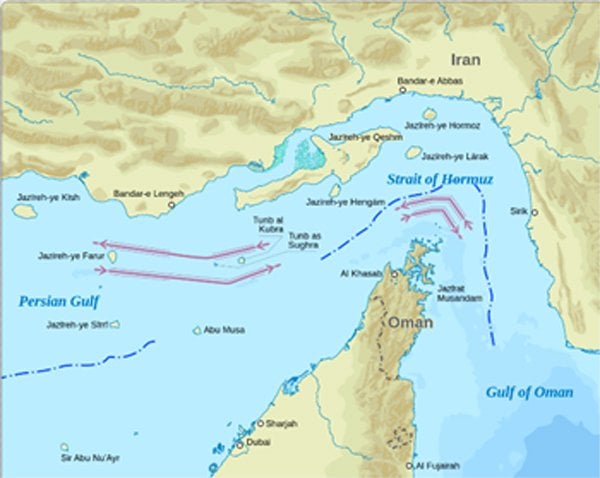
Traffic Separation Scheme shipping channels (Wikipedia)
If this incident was an attempt – most likely by IRGC Navy (Nedsa) elements – to intercept a ship, then it may reflect tensions within Iranian ranks on how to respond to what they perceive to be an increased threat of military action on the part of the United States. Some elements of the Iranian hierarchy are pressing for de-escalation and negotiations, while hardline IRGC elements are spitting defiance.
As the current standoff with Iran is likely to last some time, with the maritime community having a front-row seat in proceedings, it is worth recording that the Iranian regime tends by design to approach foreign policy crises by presenting a divided front, ‘reformists’ suggesting reasonableness on the one hand while hardliners stick to maximalist demands. This is a tactic employing the Iranian concepts of expediency (maslahat) and concealment (taqiyya), which Iran’s rulers regard as ethically permitted when Islamic rule (Velayat-e Faqih) is threatened. The purpose of these political maneuverings is to draw adversaries into negotiations and then a de-escalation of the crisis, without any real intent of making any substantial compromises.
It is consistent with this approach for the Iranians first to threaten to hold a two-day live firing exercise in the Straits of Hormuz, and then to cancel the exercise, as has occurred in recent days.
Meanwhile, the Nedaja’s 103rd Flotilla has still not returned to Bandar Abbas Naval Harbor after participating in Exercise Will for Peace 2026 in South Africa. Nor has there been any indication as yet that it has commenced what was announced was going to be an exercise on the way home with an as yet unidentified partner. Potentially, the exercise is already underway, with a possibly shy partner not wishing to make their involvement with the Iranians publicly known.
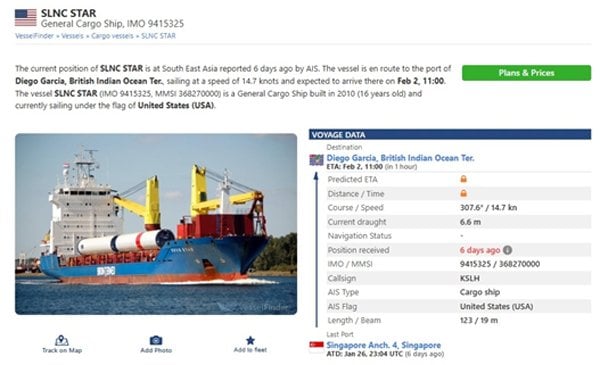
There have been no known enhancements to the US Central Command naval presence in the waters off Iran. Activity at Diego Garcia can be characterized as routine, with a C-17 heavy lift cargo aircraft and two civilian charter aircraft seen on the South Pan in recent days. The US-flagged general cargo ship SLNC Star (IMO 9415325) is currently in the Diego Garcia lagoon, making one of its regular cargo runs to Diego Garcia from Singapore. Visible at anchor is also what is probably a 290m Watson Class RO/RO ship belonging to the Military Sealift Command, and a permanent resident in Diego Garcia.

that matters most
Get the latest maritime news delivered to your inbox daily.
The SLNC Starr arrived in the Diego Garcia lagoon on February 2 (VesselFinder)
Content Original Link:
" target="_blank">