














From silence to ambiguity: Beijing steps into the Hormuz crisis cautiously
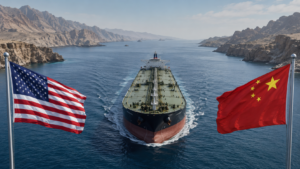
Xi Jinping’s offer to help Trump on Iran marks a shift in China’s posture but not the strategic pivot the market may be hoping for.
While Trump and Xi met, Iranian officials confirmed that a series of Chinese vessels had transited the Strait of Hormuz following direct discussions between Tehran and Beijing’s foreign ministry under what Iran publicly described as ‘Iranian management protocols.
‘ Simultaneously, the IRGC announced that over 30 ships had passed through since the previous night. And simultaneously, a commercial vessel was seized 38 nautical miles off the UAE coast by unauthorised personnel. Opening and threatening, in the same hour, on the same waterway.
Beijing has moved from silence to ambiguity. That is meaningful but it is not a resolution.
The picture that emerges from 14 May is not a new one. It is the existing strategic picture, made more visible and one degree more active. China remains Iran’s largest oil buyer and primary goods supplier the leverage instrument Trump named publicly in Beijing.
The Wang Yi diplomatic channel, which this publication previously assessed as functional but dormant, has now demonstrably produced an operational outcome: a passage protocol for Chinese vessels negotiated directly with Tehran.
Beijing has graduated from passive beneficiary of the crisis to active manager of its own corridor access. That is a meaningful step. It is not committed mediation for a comprehensive settlement.
The White House readout from the summit was confined to a single agreed principle: the Strait of Hormuz must remain open to support the free flow of energy. No framework. No Chinese commitment to specific mediation steps. No timeline.
Xi’s reported offer was conditional in Trump’s own telling ‘if I can be of any help’ and conspicuously absent from Beijing’s official account of the meeting. China has extended diplomatic availability. It has not activated diplomatic leverage.
A disclosure from US military commanders on Thursday adds a layer that markets have not yet fully priced. The US has destroyed more than 90% of Iran’s inventory of roughly 8,000 naval mines.
But Iran retains operational access to 30 of its 33 missile sites along the Strait and approximately 70% of its pre-war missile stockpile.
The practical implication: the risk to shipping has migrated from area-denial mining which closes a waterway indiscriminately toward precision missile strike, which can target specific vessels selectively. For insurance underwriters, that is a materially different risk profile. War risk premiums may not fall as quickly as a partial corridor opening might suggest.
None of this changes the binding constraint. Iran has made its terms explicit: the US must lift its naval blockade, unfreeze billions in Iranian assets, and remove sanctions before Tehran will reopen the Strait unconditionally.
Washington has offered none of these. Chinese ‘help,’ however sincerely extended, cannot bridge a negotiating gap of that magnitude without American concessions that remain politically unavailable.
The Hormuz crisis has entered its managed ambiguity phase and Beijing, characteristically, has positioned itself at the centre of that ambiguity rather than at the head of any solution.
The post From silence to ambiguity: Beijing steps into the Hormuz crisis cautiously appeared first on Container News.
Content Original Link:
" target="_blank">